
The propeller of your boat is the most essential part that changes the power of the engine into the thrust that will make you move along the water. For inboard boats, especially those used for wakeboarding, skiing, and surfing, the condition of the propeller directly affects performance, fuel economy, and overall fun. Failing to maintain the propeller regularly can lead to poor performance, excessive fuel consumption, and even damage to your boat's drivetrain.
In this tutorial, we will be giving you a very detailed explanation of all the reasons why you should look after your boat's propellers. From minor checking and washing to the more advanced level of balancing and changing the pitch, we would cover all these aspects. Hence, if you do as we say and make this a regular practice, there will be no worry about your propeller ever letting you down, providing excellent, fuel-efficient performance every time you get in the water.
Understanding Inboard Boat Propellers

Inboard Boat Prop Types
The material type and the number of blades are the two main factors that differentiate inboard propellers. The present day inboard propellers are created using following materials:
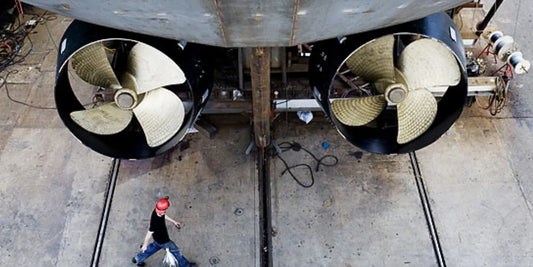
Bronze: Bronze propellers are the most common type and they offer a combination of strength and flexibility along with repairability. Bronze can usually be the biggest survivor when it comes to wear and tear, and when it fails it can generally be fixed by a good welder.
Nibral (Nickel-Bronze-Aluminum): This alloy is a more powerful and resistant to corrosion than the standard bronze. Power boaters favor nibral propellers for their ability to maintain shape under heavy loads and to lose less power/horsepower to inefficiency.
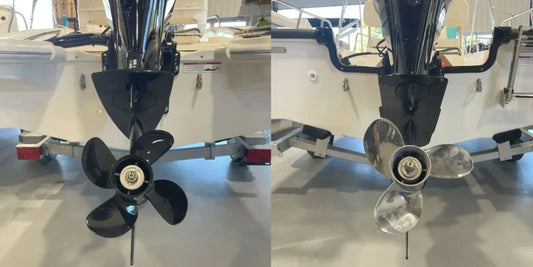
Stainless Steel: Although stainless steel is less commonly used in inboard skis and wake boats, it is a robust, durable material. It is also less likely to be damaged by minor accidents compared to bronze or Nibral.
Main Characteristics: Diameter and Bore
The propeller diameter and bore are the two main dimensions that must always be considered.
The diameter is the length extending the circle marked by the propeller blades' ends. A bigger diameter is typically the source of more thrust, giving the best performance to the heaviest boats and sports in need of powerful pulling, like wakeboarding. But, at the same time, the diameter is restricted by the protruding propeller tips vis-à-vis the boat’s hull.
Bore: The bore, in its simplest term, is the opening in the cabin of the propeller hub which is somehow fitted into the propeller shaft. It’s, therefore, very much important that the bore size is an absolutely accurate match to the shaft diameter to ensure that the propeller fits securely as well as to prevent potential damage and vibration.
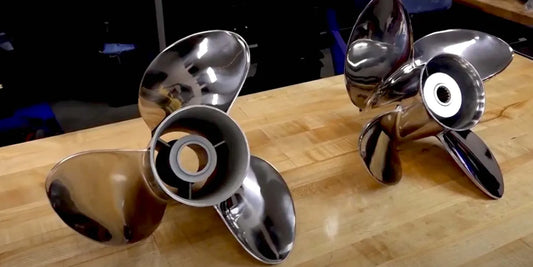
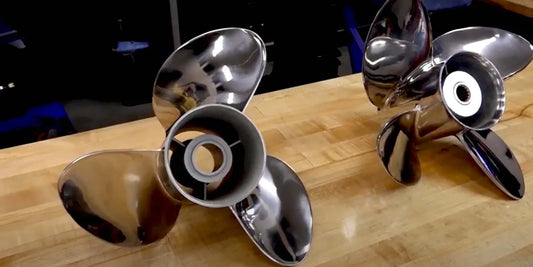
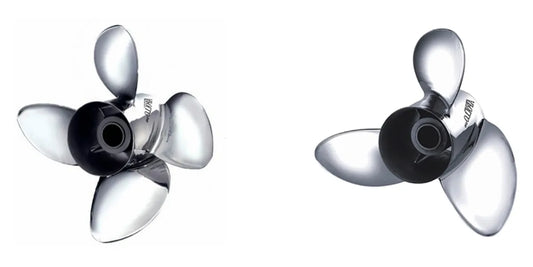
3-Blade vs. 4-Blade Propellers
The number of propeller blades makes a very great difference in the performance of the propeller.
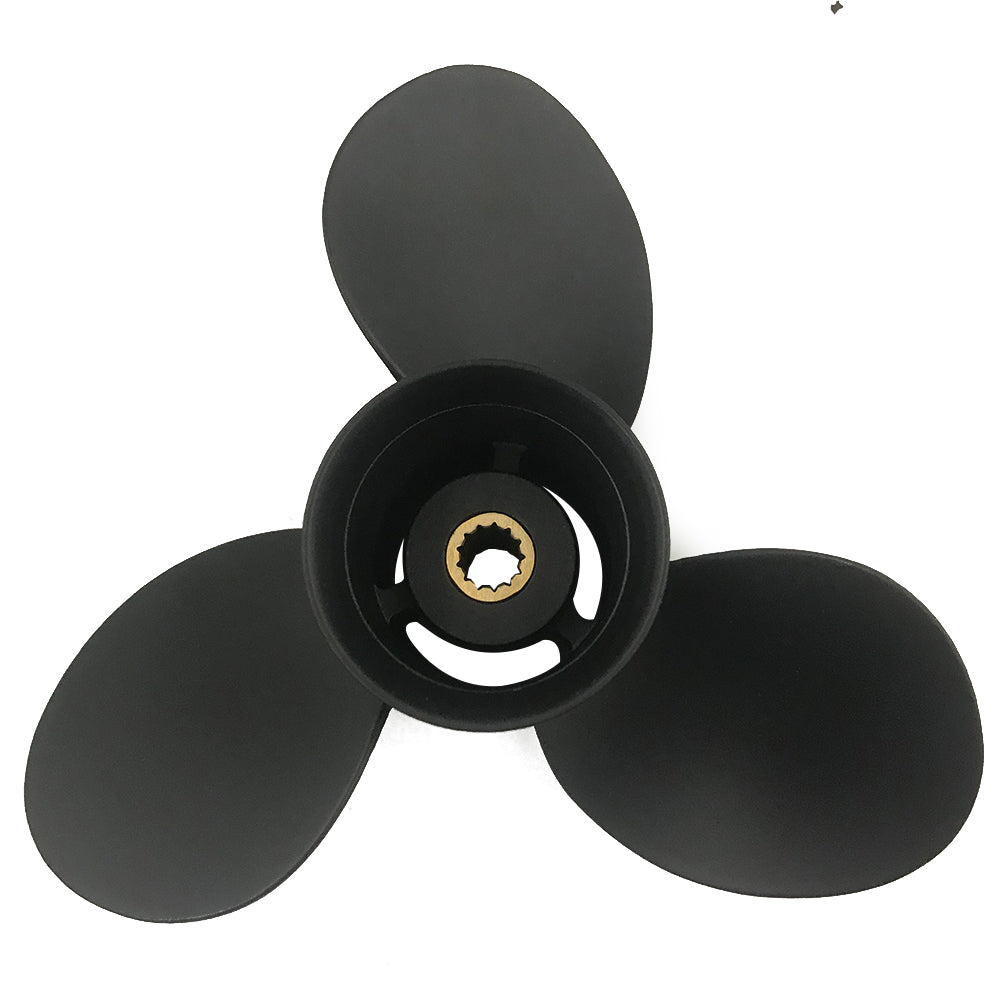
3-Blade Propellers: A lot of boats use them as their standard and as a common option. Usually, they make for a better top speed and provide a more economic cruising speed. But the downside is that they produce more vibration and might lack acceleration or hole shot compared to a 4-blade propeller, which is usually the case for the same boat.
4-Blade Propellers: When a fourth blade is put into a propeller, the only possible outcome is that the blade surface area is increased in the water. This eventually leads to smoother operation, lower vibration levels, and improved acceleration. When it comes to wakeboarding and wakesurfing, which are extreme water sports that require a powerful, steady pulling effort, a 4-blade propeller wins out over all others. It not only makes the boat come to the plane faster but also does so more easily even when the boat is heavily loaded with ballast. However, there is a slight catch and that is the 3-blade propeller has a slightly faster top speed than the boat with the 4-blade propeller.
Maintenance Essentials for Inboard Propellers

Regular Inspections and Cleaning
Inspect your propeller regularly and properly. A thorough inspection should be carried out before and after each use. Search for any visible damage like the presence of dings, nicks, or bent blades on the blades. A little damage can also cause vibration and affect the performance.
In the event of working in water that is full of weeds and debris, bear in mind to check out the area of the propeller shaft for any object that may be wound around it, e.g., fishing line or vegetation.
Use a good soft brush and marine-safe soap product for regular cleaning of your propeller, and so you will remove the algae, barnacles, and other growth found in the water. The propeller getting free of these things operates very efficiently.
Identifying Wear and Tear
Due to the long running of the propeller, they all eventually show signs of wear.
Cavitation Burn and Reduction of Blade Material: With the pitting on the surface of the mycological blade being a sign of the "burnt" appearance that is caused by cavitation, which is the bubbling and precipitating of the water vapor due to the low pressure: this is about to erode the blade material.
Blade Thinning and Sand-Silt Abrasion: Water, sand, and silt play a role in abrasive wear and the blades are getting thinner each day that goes by, simply to be less efficient.
Inspect your alloy’s blade-to-hub joint for a stress crack. Such a crack might indicate metal fatigue, which could cause the blade to fail if left unchecked.
Lubrication the Proper Way
Propellers need no lubrication, while their shafts and other parts do.
Check the propeller shaft alignment and confirm the cutlass bearing is good. The cutless bearing is one type of rubber-lined bearing that supports the shaft. If a cutless bearing is worn, trouble is ahead due to vibration and wear on both the shaft and the propeller.
The propeller should be properly fastened to the shaft. A key is inserted into a slot on the shaft and a corresponding keyway in the propeller bore to prevent it from spinning freely. A cotter pin is used to secure the propeller nut, preventing it from backing off. Always use a new cotter pin when reinstalling a propeller.
Choosing the Right Inboard Propeller

Things to Think About: Brand and Material
Brand: Well-known names like Acme Propellers specialize in high-performance watersports props. They use modern manufacturing methods, such as CNC machining, to ensure every propeller is perfectly balanced and meets exact requirements.
Material: One of the most popular options, Nibral, is generally used for inboard wake and ski boats because of its durability and performance.
Inboard Propellers – Where to Purchase
Curious where you can get the best offerings for inboard propellers? Check out the marine supply stores, boat dealerships, and online retailers for inboard propellers. The search for the right propeller will require you to know your boat's manufacturer, engine specifications, and titanium diameter. It's also good to have the diameter and pitch of your current propeller handy.
Left Hand (LH) and Right Hand (RH) Props Defined
One way to differentiate propellers is by their rotation direction.
RH (Right Hand): The propeller on the right-hand side rotates clockwise (when viewed from behind). This direction of rotation is essentially the same for all single-engine inboard boats.
LH (Left Hand): The LH propeller turns anticlockwise to produce forward thrust. In twin-engine craft, a combination of one RH and one LH propeller is used to overcome torque and improve maneuverability. In exceptional cases, when an LH prop powers a single-engine boat, and it becomes a necessity the user should double-check and be sure about their boat's requirements.
Specific Considerations for Recreational Use

The Impact of Wake, Ski, and Surf Activities
Engaging in watersports creates a completely different environment for a boat's engine.
Wakeboarding and Wakesurfing: These activities usually involve boat ballast (weight), which adds to the size of the wake. The extra weight requires greater thrust to get the boat to plane and maintain speed. A 4-blade propeller with lower pitch usually is the best under these circumstances as it provides the required low-end power.
Waterskiing: A boat used for slalom skiing should accelerate quickly and maintain a steady pace. A propeller that gives decent hole shot is one of the benefits.
Tuning the Prop for Best Performance
The "pitch" of the propeller is the distance it would theoretically move in one full rotation.
Lower Pitch: A lower pitch is good for accelerating and pulling but limits top speed. It’s like giving a car a higher gear.
Higher Pitch: Higher pitch brings a higher top speed but loses some acceleration.
The correct pitch choice is a fact determined by the primary use of your boat. If the majority of your time is spent in the wakesurfing position, a prop with a lower pitch would probably be the best thing you could have in terms of performance and engine strain. However, if you are all about top-speed cruising, then a higher-pitch prop might be the best option.
Advanced Maintenance Techniques

Balancing and Pitching Your Propeller
The expertise of a professional can still be of help with even a new propeller.
Balancing: Prop shop specialist can make your propeller balanced in a dynamic way that besides they can remove the vibrations that had not been taken out during the manufacturing process. The result is a ride that is smoother and less noisy.
Pitching: Similarly, the expert can change the pitch of your propeller to a more suitable one for your purpose. All blades should also have the same pitch as this is necessary for the smooth operation of a boat.
When to Consider Professional Servicing
When your propeller shows the subsequent signs, it is high time to take it to a professional prop shop:
A significant number of dings, bent blades, or missing material.
Continuous vibration which has no connection to another cause that you can find.
Belated performance of the boat or more gas consumption that is easily noticed.
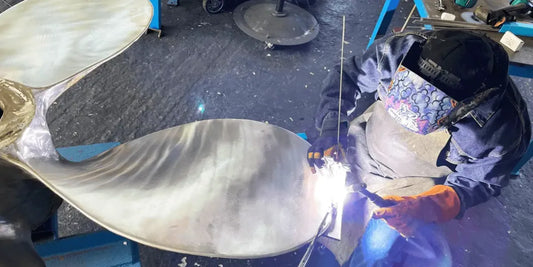
A skilled prop shop can usually repair bronze and Nibral propellers damage, which might be an entirely new prop's value. They can weld new material, reshape blades, and re-balance the prop to a condition as good as new.
Reference Sources
- Propeller Maintenance - Boat Maintenance Tips
- A Must-Know Guide to Boat Propeller Maintenance
- Recommended Maintenance For Your Inboard Boat
- 7 Tips for Boat Propeller Maintenance
- A Must-Know Guide to Boat Propeller Maintenance
Frequently Asked Questions (FAQs)
What are the advantages of using a 3-blade inboard propeller for my boat?
A 3-blade propeller is commercially available because it provides the right balance of speed and thrust for a range of marine applications, offering smooth performance for both yachts and work vessels. With a 3 blade design, there is usually a better acceleration and less vibration as opposed to some of the stock alternatives, which in turn can enhance hull efficiency and comfort for wakeboarding or cruising. The usage of 3 blade is a common practice among many boat manufacturers and boat owners when they want to have particularly reliable propulsion systems that are to the engine and shaft specifications. Depending on whether one would give priority to the resistance to corrosion, the 3 blade shaft of the vessel can be obtained in bronze, stainless steel, or nibral with respect to the higher risk, lower cost, or higher durability, respectively. The right combination of pitch propellers and propeller diameters provides a perfect power transfer and speed for your particular ship.
When should I opt for a 4-blade propeller for enhanced power and control?
4 blade propellers offer a plus in thrust at lower-middle speeds hence making them very attractive for the heavy or commercial boats as they will be able to plane more efficiently and oblige to the towing or wakeboarding tasks even better. Moreover, their extra blade area provides the water with more contact, leading to better acceleration and less cavitation for large loads or when equipped with larger engines. With regard to the inboard propellers, the 4 blade choices are generally more suitable for the vessels with larger shafts and the engine outputs having higher torque, either from diesel or gasoline. A good number of people who own boats prefer to choose the 4 blade stainless steel or bronze props which are quite durable, from the ingoing boat propeller inventory which they trust for their propulsion systems. In the case where comfort and control outweigh the significance of speed, a 4 blade configuration might be the most suitable compromise.
Are the stainless steel inboard propellers different than the bronze or nibral models?
Stainless steel propellers are referred to as high-quality and formidable, they give excellent composure in high-performance or commercial vessels that demand reliable underwater components. Bronze and nibral offer good corrosion resistance and are commonly used by boat builders on production boats and stock replacements, with nibral supplying a balance of strength and cost for many applications. Stainless steel can hold a thinner blade section for improved efficiency and speed, but it is typically more expensive than bronze or nibral. When matching propellers to your engine and shaft, consider the hub design and whether the propeller needs to be a replacement for a specific Volvo Penta or other series driveline. For high-performance or heavy-duty use, stainless steel often proves to be the most reliable long-term choice.
What's the process of selecting the correct propeller diameter and pitch propellers for speed and efficiency?
Selecting the correct propeller diameter and pitch is crucial because having greater diameter affects thrust and load on the engine, whereas pitch governs the distance the boat can cover in a single revolution and hence directly controls speed. Larger diameter nets extra thrust and can even assist in lifting heavy boats on plane, but both the pitch and the diameter if taken too large may strain the engine and thus drag the boat at a slower speed or result in heating of the propulsion system. Existing propeller-providers and ship craftsmen typically suggest ranges for hub design, shaft size, and engine power to go hand in hand with high-performance propellers. For the correct match, you may need to test the propellers and different pitches or refer to a storehouse of inboard boat propellers that have spec sheets for each series and material such as stainless steel or bronze. Boat owners seeking more speed or better fuel economy may trade a stock prop for a high-quality replacement tailored to their hull and load profile.
What maintenance and replacement considerations apply to commercial or recreational underwater propellers?
Regularly checking the propeller blades, hub condition, and shaft alignment can make a big difference to vibration and speed reduction, and avoiding propulsion system damage in both commercial and recreational vessels. When searching for nicks, bent blades, or corroded stainless, bronze, or nibral props, catch any issues early and save yourself from more expensive repairs or inefficient operations. Keeping an accurate database of inboard boat propellers or ordering a spare set promptly after one propeller is worn out is a good practice for owners of yachts, ships, and workboats who want to avoid downtime. It is common for businesses to adopt the combination of high quality and durability in materials and the provision of spare parts, while powerboat owners may go for the more practical option of picking from the variety of propeller selections that are available for wakeboarding or leisure cruising and not merely based on cost. In case you do not know, you can go the conventional way of choices like Michigan Wheel, Veem, Nakashima, or any other widely recognized brand, but these directions lead to the fact that this will still be only a positive impact if you take good care of the ship.
Tags: