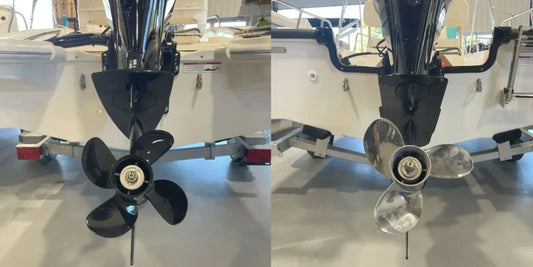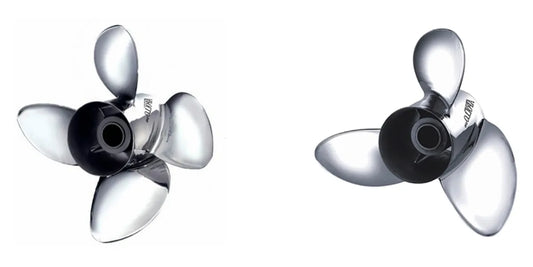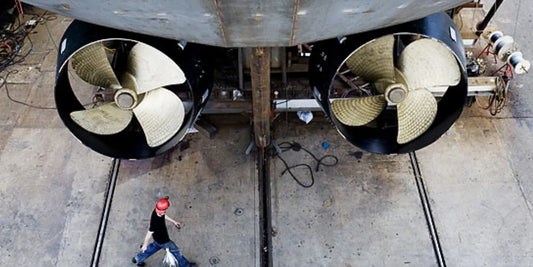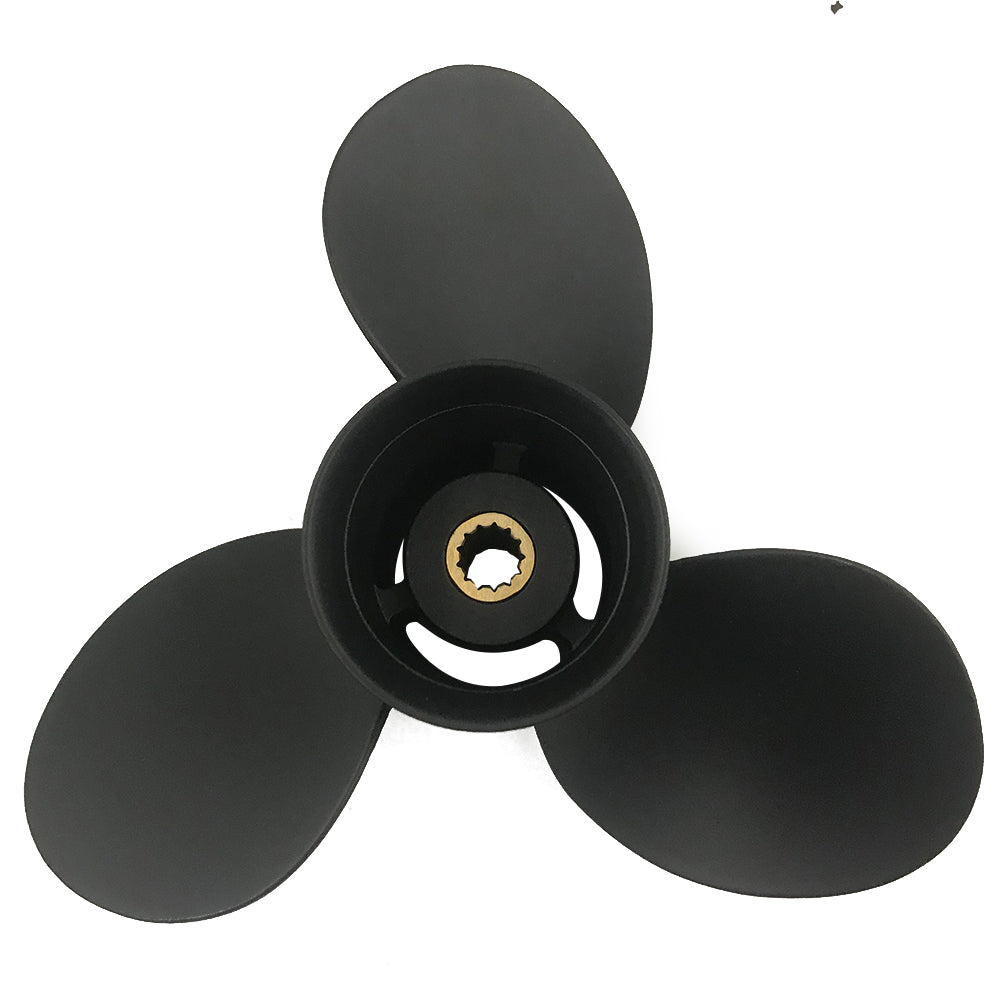

When selecting the best propeller for your boat, the decision between a 3-blade and a 4-blade prop can be crucial. One propeller offers benefits that differ and aim to meet various boating needs, performance preferences, and even operational conditions. Nevertheless, which one will you choose? This essay will closely look into the almost imperceptible yet important distinctions of 3-blade and 4-blade propellers so that you can make an intelligent and customized selection based on your ship and use. If you are looking for higher speed, better maneuvering, or more efficient fuel use, having insight into the main differences between the 2 types is a must. Be ready to learn about the things you need to know to choose the correct propeller and give your boating experience a boost!
Understanding Propeller Basics

What is a Propeller?
A propeller is a machine-made device that can deliver thrust, hence, a ship to travel through water smoothly. It is made of a central hub and blades that protrude in different directions which are curved to change the water's direction. The propeller, as it turns around, displaces water hence creating a difference in pressure which will propel the boat forward or backward according to the rotation's side. The propellers are a very important part of a boat's performance as they will affect the speed, fuel economy, and handling. The boat user using his knowledge of the propelling laws and design differences like blade number, pitch, and the diameter can modify the boat for different uses, for instance recreational, fishing, or racing by changing the propeller.
Types of Propellers in Boating
Propellers come in various designs, and each of them can provide the required amount of speed according to the conditions. The most common types of propellers are:
Fixed-pitch propellers are the least adjustable but most reincurring and reliable type, and their blades' angles stay the same which cannot be made any adjustments. They possess the best quality and effectiveness which makes them a favorite for average boating and recreational applications. Fixed-pitch propellers truly shine in static conditions and their upkeep is very easy.
Variable-pitch propellers are the type that can be changed in terms of blade angle to handle the best performance for different speeds, and load requirements which is the most favored type of the vessels. These propellers are the best fit for complex and hard locations where the requirement is for a fast response time and energy transfer, after all, they are not as polluting as one could have thought and at the same time, they are not as inefficient as they may seem to be.
Cupped Propellers:Cupped propellers show a distinctive characteristic of being an added curve or cup at the blade's trailing edge. Such a design is capable of increasing the grip in the water, reducing ventilation, and consequently improving performance at higher speeds. They are the most suitable for the water activities where boats like waterskiing or high-speed cruising are particularly involved.
Four-Blade and Five-Blade Propellers:Compared with the standard three-blade setup, four- and five-blade propellers own smoother working and more thrust. They are especially good in rough water condirions, increase stability, and add up to the mid-range performance in a positive way. Those who are highly concerned with towing heavy loads or maintaining steady speeds are the ones who frequently go for these patterns.
High-Performance Propellers: Propellers specially crafted for speed-centric applications are usually made of materials such as stainless steel and have innovative blade shapes. This kind of propeller is primarily used in racing or competitive settings where reaching the highest possible speed and also controlling the handling are essential.
Weedless Propellers: These are the ones made for the cases where there is a lot of vegetation or debris in the water. The exclusive configuration of the blades is meant to make clogging as minor as possible and to keep the performance at its best, that's why they are the best for fishing or maneuvering in the waters that are shallow and have plants all over. Choose the ideal propeller by going through the boat's structure, engine specifications, and intended application. Each category serves a specific purpose and recognizing these can really add up to a better boat performance, fuel economy, and the overall experience on the water.
Significance of Blade Configuration
The design of the propeller, or so-called blade configuration, is a very significant factor for determining the performance, efficiency and the suitability of a boat for some specific activities. The number of blades not only affects speed, but handling and thrust as well. For instance, a three-blade propeller usually indeed provides a compromise in terms of speed and efficiency, making it thus the ideal choice for many different working situations and experiences, e.g. recreational boating and/or fishing. On the other side, four-blade propellers can be useful also by featuring more thrust, better maneuvering and smooth operation, which are perfect for watersports as well as heavy-duty operations.
Moreover, the propulsion blades are also affecting the acceleration, fuel economy, and top speed at the same time. The angle of the blade affects the pitch. A blade with a bigger pitch results in a higher speed but might cause a shortage in acceleration whereas a smaller pitch blade results in faster take-off but also limits the maximum velocity. Materials like aluminum, stainless steel, or composite make the propeller’s structure stronger and providing excellent operational performance. Boaters who are well informed about these parameters can work perfectly with their boat so that besides lessening the burden on the engine, they can also achieve better control and performance in different water types.
Comparison of 3 Blade and 4 Blade Props

Characteristics of 3-Blade Props in Relation to Performance
Three-blade propellers have the ability to provide high speed and high efficiency and therefore, they are a commonly chosen type by boat owners. They usually have less drag compared to propellers having four blades and hence help in making the vessel achieve higher top speeds. This is the main reason why they are highly preferred for the sectors where the speed is the key factor, for example, day-to-day boating and racing. Moreover, the 3-blade propellers are also able to bring about the improvement of the efficiency of that whole system in an easier manner due to which when compared to the 4-blade propellers, they are considered the better alternative.
Yet, this bargain usually comes at the expense of not so stable conditions and low-speed maneuverability, these aspects of 3-blade propellers, which are just a bit worse than 4-blade ones. Being the lighter option and having less resistance, 3-blade propellers can be a key factor in fuel efficiency in case of perfect conditions. Their basic design additionally serves as the reason to pick them since boatsmen need not spend more money and give up effectiveness to get the expected results. 3-blade propellers are the best option when it comes to performance, expenses, and driving convenience, as they give it all to diverse and typical boating opportunities.
Performance Characteristics of 4-Blade Props
As a result of the implementation of four-blade propellers, boats are enabled to benefit from the superior stability, maneuverability, and grip in water, which eventually leads to them becoming the best choice for some specific boat activities. These props exhibit their greatest effectiveness in the cases where more power and control are needed, for example, in the instances of towing or negotiating the turbulence of rough waters. Moreover, the one extra blade is of a significant help as it lowers vibration and makes the operation even more gentle and comfortable in general.
They are also perfect in the way they achieve consistent results across the speed range, that is, they provide a high level of acceleration and inertia at the same time in locations where the weather, for example, is severe. Though they can somewhat compromise top speed as compared to three-bladers, yet their excellent maneuvering and cavitation reduction make them the best choice for powerful and stable boats. Such attributes, alongside their tough and versatile natures, have placed four-blade props alongside the top performers in the performance-oriented world of marine.
Fuel Efficiency: 3 Blade vs 4 Blade Prop
Selecting either a three-blade or a four-blade propeller is mostly based on the boat's specific operating conditions and its performance demands, the most significant factor being fuel efficiency. A three-blade propeller is often the preferred choice for gaining higher speeds and better top-end performance, and this can result in significant fuel savings in the long run, e.g. when cruising at optimal RPMs. The propeller's aerodynamic design also accounts for drag reduction and thus guarantees a very steady boat, which translates into less fuel being burnt when speed and minimal resistance are important.
Nonetheless, a four-blade propeller is at its best at the low speed end of the operating range. It also has higher surface area and therefore higher drag, consequently it uses more fuel than the three-blade propeller during maximum speeds. On the other hand, the four-blade propeller improves the fuel economy of the tug, it pulls or the boat when it needs precise handling. The responsive of a four-blade propeller is the improved pitch and less slip which allows the operation in different conditions in terms of fuel use and performance. The decision, in the end, is the speed, handling, and load requirements its achievement would largely vary according to fuel economy.
Advantages and Disadvantages

Advantages of Using 3 Blade Props
3 Blade Propellers are notable for giving well-rounded performance in terms of both speed and efficiency. Due to their efficient construction, they tend to create less drag which in result enables higher top speeds compared to 4 blades. This particular feature makes them a fantastic choice for leisure boaters who want to have the max speed when they are on the water. Also, 3- blade props are normally lighter which leads to a faster acceleration and better responsiveness on the open water. They also occur to be more budget-friendly, thus making them a very sensible option for a large number of boaters. Nonetheless, although they work great in general, comprehension about boating needs in the specific will be a key factor to make sure the propeller pick is the optimum one for a consistent and efficient operation.
Benefits of Using 4 Blade Props
It has been observed that four-blade propellers come with a range of advantages that not only make them the priority in specific boating environments and demands but also result in their overall higher preference. There is no doubt that one of the main good aspects is their superior steadiness and better running, notably in rough waters. The extra blade offers a higher water surface contact and thus improved control alongside reduced slippage, which is very much appreciated in water skiing or fishing where the action has to be a matter of pin-point accuracy.
Also, the use of four-blade propellers has been discovered to be the factor behind the increase in fuel efficiency while cruising at a constant speed and hence they have an advantage at one go by being afactor in the increase of fuel efficiency of boats. This, in fact, proves that they are undoubtedly the most advantageous type of propellers for sailing long distances or for the boats that place their bets on the economy rather than the speed. Another feature of the four blade propeller is that it gives a superior performance in handling at low speeds which is perfect for places like the dock and places having very limited space for maneuvering. In general, users might observe higher weights in the four-blade options that are slightly heavy compared to the threes, however, this can be compensated by a more targeted and less problematic navigation and hence can meet all the variety of purposes they are used for.
The bad sides of the two groups of propellers
While looking at different propellers, it's crucial to keep in mind the potential limits that each variant could impose. A four-bladed propeller, though it provides better maneuverability and less bumpy rides, is somewhat slower at its peak than a three-bladed one. This compromise might not be the best choice for applications requiring high speed like racing or high-performance boating. On top of that, their added drag and weight might raise fuel consumption a little under some conditions.
On the contrary, three-blade propellers, for the most part, bring high speed and to a small extent better fuel economy ones at cruising speeds. But they can be externally difficult to control and are less stable at low speeds, which could affect precision docking in rough water situations. Such a situation might be the challenge when it is crucial to handle the boat consistently and the thrust balanced. The trade-offs people make are better made with more understanding of the matter and they thus can be more secure in the right choice of propeller that fulfills the unique operating demands of their particular situation in terms of performance, efficiency, and versatility.
Choosing the Right Propeller for Your Boat

Factors to Consider in Propeller Selection
The factor that must be considered to great extent in the selecting of a propeller for a ship is various because is performance and efficiency guarantee. Being able to know and understand these elements can be a significant way of further enhancing your watercraft because the propeller and your ship's requirements are set to be the propeller's capabilities.
Boat Type and Usage: The first aspect to be looked into is the kind of the boat and the major purpose like fishing, cruising, or extreme water sports. Each of the activities requires particular forces and this influences elements such as speed, thrust, and fuel efficiency.
Engine Specifications: By the propeller to the power of your engine and the range of the RPM also the propeller will come to be in the engine's best fit. This results in the engine being correctly driven, and so the fuel economy is enhanced and the life of the engine is prolonged.
Material CompositionPropellers are usually constructed from stainless steel or aluminum. In comparison, the stainless steel choices are the most long-lasting and are good for "fast boat" use, while the aluminum props are rather more budget-friendly and most suitable for "the casual boater."
Diameter and Pitch:Both diameter and pitch of a propeller are contributing factors towards your vessel's speed and handling characteristics. A propeller with a higher pitch increases the speed of the boat but at the same time also needs more engine power. Furthermore, a smaller diameter can provide better maneuverability in tight spaces.
Number of Blades:Propeller's blade number is responsible for stability and thrust. Speed and efficiency are two of the attributes of the three blades and at the same time, the four- or five-blade options offer even greater handling and control, especially in tough waters or while towing.
Load and Weight Distribution: Always think about the average load that your boat usually has such as passengers and stuff. A heavier load may need the propeller with a lower pitch to create more thrust and to keep the performance.
Water Conditions: the different water areas that you visit most often - be it quiet lakes, wild seas or hardly flowing rivers - bring about the need to change your propeller. For instance, in shallow waters, it may be the case that a propeller is designed to withstand less abrasion from debris.
A careful examination of these factors makes sure that the propeller you opt for not only serves but also backs up your boating dreams by being efficient, durable, and functional at the same time.
How Boat Type Affects Propeller Choice
Choices that the vessel type has some big influence on the most suitable propeller. Vessels are manufactured for the main purpose, and it can be from casual cruising to being the fastest on water or heavy-duty towing, the proper propeller must be suited to the user's needs. In the case of fast pleasure boats and small yachts, the propellers must have the highest speed and acceleration because a great number of them are made of stainless steel with an eye on considerable drag reduction and overall durability. Chiefly, sport fishing boats and workboats require propellers having the most torque and thrust while sacrificing speed to a minimum, as the service will be held under different loads and still be acceptable.
The design of the hull also has an impact on the efficiency of the propeller. Boats having hulls with deep V-shape is said to be the most suitable for propellers, which are more water-resistant, energy-saving, and sustainable while flat-bottomed boats may need a blade-type that is better in terms of stability and shallow draft handling. The determinant factor for what kind of pitch and diameter the propeller has is the weight and size of the boat along with its passenger and cargo capacities. Ultimately, the alignment of all these parameters is vital to sustain fuel economy and have a long lifespan as well as easier to operate. Aligning a boat's type and propeller requirements through knowledge would provide a harmoniously matched installation serving both the needs of performance and the operations.
Usage-Based Recommendations
To ensure that your boat performed well, you have to go through the process of picking the right propeller which suits your activities on water or on the environment. Some of the boating enthusiasts choose a higher pitch propeller that offers the best performance at the top-end speed. On the other hand, a lower-pitched propeller can be the better choice for the high initial acceleration if the boat is to tow wakeboarders or water skiers. Furthermore, fishers who are operating in shallow or vegetation infested water can also benefit from propellers with designs that decrease drag and run the risk of fouling. Besides, the boat could also go through the stainless steel or four-blade configuration path for the grueling task of long-distance voyages or commercial use and none but the 2 are among the most fuel-efficient—what if they are one and the same?—the propeller materials and design must not only be fit for use but also be contributing to the goal of an environmentally friendly boat.
Real-World Applications and Case Studies

Case Study: Performance Testing 3 and 4 Blade Props
One of my main focuses during the process of observing the 3-blade propellers alongside the 4-blade ones was the definition of multiple performance areas such as the rate of the vessel, the capacity of the fuel, the convenience of the steering, and the overall wear and tear on the motor. The main reasons for this selection at that time was the different possible tests and the different conditions under which the tests would be carried out, e.g., the varying speeds from cruising to high speeds for which each was rated. The 4-blade propeller could be termed the forerunner of top-end speed, but in most conditions, it was not much different from the sister propeller. Its only minor difference (positive) was that its heavier construction required the most potent engine to strain while cruising (Harris, Pritchard & Rabins, 2009; Eppinger & Eppinger, 2010). Yet, I observed that turn events, such as the water surface being disturbed or wave conditions becoming stronger, made the 4-blade propeller the weaker option. In the first place, the instability arising from the depreciation of the contingency partly caused the craft to slow the engine.
The 3-blade propeller consistently stood out in terms of top-end speed. Its lightweight design and reduced drag enabled my boat to reach higher velocities faster, making it an ideal choice for activities like water skiing or fast-paced recreational boating. However, during turns or choppy water, I noticed slight instability and reduced steady control, particularly at lower speeds.
Conversely, the 4-blade propeller showed impressive handling and stability. That resulted in a smoother ride when doing the hard turns and the more sure grip flow through the chop. This plan also performed well at mid speeds, making it the best option for fuel efficiency over long cruising hours. Sure, the 3-blade propeller had a slightly higher maximum speed, but the power of the 4-blade one was felt more constantly and reliably, especially in such scenarios as towing or passing against strong currents. As far as the motor's efficiency was concerned, the 4-blade model took the strain off the engine, especially at lower RPMs, resulting in better long-term durability.
Ultimately, the choice of a 3-blade versus 4-blade prop mainly lies in how you are going to use it. If fast sailing is what you are mostly concerned about, the 3-blade propeller may be best for you. Conversely, suppose you are looking for greater stability, better fuel efficiency, and easier handling across all kinds of waterways. In that case, the 4-blade propeller is the right choice thanks to its wide range of features. By selecting based on these performance characteristics, you are positioning yourself to get the most out of the time you spend on the water, in a way that aligns with your objectives.
Stories from Users of Different Propeller Configurations
In my personal observation, the decision to opt for a 3-blade vs a 4-blade propeller is mainly a matter of the mode of boat use and the location where it is being used. When the fast-moving and rapid-getting boat is the priority, that is, for water skiing and racing over large stretches of water, the 3-blade propeller was the best option in my opinion. This is a uniquely designed propeller that can create the highest possible speeds and is the most controllable at the maximum throttle. In all cases, this simple arrangement of the 3-blade propeller provided me with the force required for extreme quick handling and higher speeds.
In contrast, one would opt for a 4-blade propeller on expeditions focused on cruising or fishing, and where stability and fuel efficiency were of prime importance. It was the 4-blade propeller that made the difference. Steering was smoother and the boat was more responsive, even in the worst sea conditions, and the propeller was responsible for the boat’s noticeable better performance at the middle ranges. Also, it was a great saving on fuel as the boat could go farther more economically and simply made the long-distance travels less costly on the average. The 4-blade prop enabled the boat to be more manageable at lower speeds and thus, gave a sense of ease and security, especially when the boat was passing through narrow or crowded areas.
Finally, the one-size-fits-all "better" option didn’t cut it for me—I concluded that one has to be aware of the unique boating needs. I got to know the sailing world better through the propeller being the central one. The choice between speed and stability is yours alone, but on the propeller issue, getting the match right will ensure that you get the most fun out of your boating.
Expert Opinions on Propeller Selection
Having researched the most recent wisdom and pieces of advice from marine experts and producers, I have found out that choosing the correct propeller is the mixture of technical comprehension and practical experience. The specialists often stress that the pitch, the diameter, and the number of blades are the most significant factors to take into account of when customizing your setup. For instance, a propeller with a lower pitch can give extra acceleration and it is ideal for wakeboarding or water skiing. In contrast, one with a higher pitch is usually chosen for long-distance cruising due to higher fuel efficiency. The combination of these factors is very important since it directly affects the performance and fuel consumption of your boat.
Besides this, the preference of material is of the utmost importance. The strength of the stainless steel propeller is praised as well as its good performance in cases of the need for speed and precision, whereas the cost of the aluminum propeller is more favorable and it is a good option for most of the pleasure boaters. Besides, some of the experts point out the trend of modular propelling systems even more and declare that very soon they will be as common as the non-modular ones. The user-friendliness is, thus, being the point of conversation now but the communities talking about it fervently are rangy.
To sum up, I have come to the conclusion that professional advice is the key. Boating and propeller specialists and marine technicians can give you the right recommendations according to your boat’s engine, hull type, and the way you plan to use your boat. These suggestions mixed with the practical testing will surely lead you to the perfect hermeneutics of performance you’re chasing—whether the expression is speed, stability, or efficiency.
Reference Sources
- 3 Blade vs. 4 Blade Propeller - Michigan Wheel
- 4 Blade vs 3 Blade Propeller - The Hull Truth Forum
- 3 or 4 Blade Prop - Boat Talk
- Topic: 3 Blade vs 4 Blade Props - BassCat Forum
- 4 Blade Prop Versus 3 Blade - Bennington Marine Forum
Frequently Asked Questions (FAQs)
What's the difference a 3-blade prop and a 4-blade prop?
The main difference between a 3-blade prop and a 4-blade prop is their design and performance characteristics. Generally speaking, a 3-blade propeller is capable of achieving higher top speeds due to lower drag, so it's most suitable for racing and high-speed uses while a 4-blade propeller enables the same boat to have better hole shot and to accelerate faster, thereby enhancing the boat's performance at low speeds. The increased area of the 4-blade propeller's surface area, in theory, should help to maintain control and stability, especially in rough-water conditions. In the end, the choice is always about your specific boating needs and your boat's hull design.
Can a variation in the number of blades lead to a propeller's performance change?
The choice of the number of blades of a propeller is a very decisive factor in the performance characteristics of a vessel. In general, a 3-blade propeller allows operation at higher rpm and thus a higher speed, the advantages of a 4-blade propeller are launcher starting and more uniform power at lower speeds. The extra blade of a 4-blade prop plays a significant role in reducing the slip and boosting fuel economy, particularly during cruising. However, if speed is the main priority of the vessel, then a 3-blade prop might be the perfect choice. Ultimately, the best prop for you will be the one that fits the intended usage of your boat and the power characteristics of your engine.
Would the use of a 4-blade propeller make fuel economy better?
A four-blade propeller can bring better fuel consumption in certain circumstances. The new addition to the blade cuts the air in a better way, thus making the engine’s work more efficient, and therefore reducing the consumption. This is most likely to happen in the cases of low rpm’s when the engine doesn’t work that hard. The propeller can also be very efficient at the highest speeds due to the lower working temperature. By this means, a four-blade propeller can be beneficial. On the other side, however, it should be known that it might still be slower at its most efficient speed than a three-blade.
What kind of boat would most benefit from a 4-blade prop?
A large boycott of boats delivered to benefit from a 4-blade prop, particularly those that are made for water sports, heavy loads, or rough water conditions. The boats that, for example, wish to be faster on the water like the ski boats or the wakeboard boats, sometimes have a better hole shot with the 4-blade propeller causing its better hole shot capability. Also, boats that are very large but still need to be stable and controlled at low speeds will benefit from the extra blade. Generally speaking, if your boat's performance is about low-speed handling and control, the transition to a 4-blade prop can give you the best of both worlds.
What about a 4-blade propeller on a boat in rough water situation?
A 4-blade propeller is typically regarded as the optimal propeller for rough seas as opposed to a 3-blade prop. The larger blade area and surface area create better grip and higher stability that allow the boat to run through waves and still have control. This stability factor might also result in a more comfortable ride with a lower possibility of ventilation and cavitation which can be the case with a 3-blade prop on rough water. When you often encounter waves or rough weather, a 4-blade prop can provide the better performance and reliability that make it a safer and more joyful boating experience.
Which propeller is more suitable for high-performance use?
For the majority of times, a 3-bladed propeller is regarded as the primary solution for high-performance machines due to its capability to produce peak speeds and cut down the resistance. The creation of a 3-blade prop makes it possible to have a significantly higher number of rotations per minute (rpms) which is a major requirement for speed contests and other fast boating activities. However, if the objective of the application is overall performance in different conditions, including lower speeds, and having a better hole shot, a 4-blade prop may be the best choice. In the end, the specific goals of your boating experience and the engine specifications will determine the most suitable prop for high-performance applications.
Tags:
Previous
How the Difference Between 3 and 4 Blade Prop Impacts Speed and Efficiency
Next
How to Choose Between 3 and 4 Blade Props for Optimal Performance