
In any sort of lakes, rivers, or the open sea that you're working on, having a good relationship with your propeller, especially if you're cruising, is really important, and the first question that comes to mind is often that of a 3 or 4-blade prop. The blade count, one of the most controversial issues in the boat industry, is connected with speed, fuel consumption, boat control, and, in general, the overall quality of the boat's performance. Knowledge of the differences is key for those who want to choose a 3-blade propeller for rough-conditions control and a 4-blade propeller for the fastest top end. All that you have to do is one click away from the time of taking the decision in favor of any of these propellers because you have the best expert help through this comparison of pros and cons.
Introduction to Propeller Types

What exactly are 3-blade and 4-blade propellers?
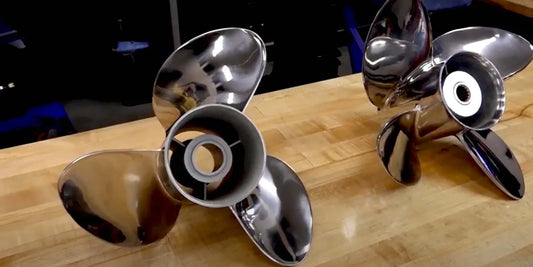
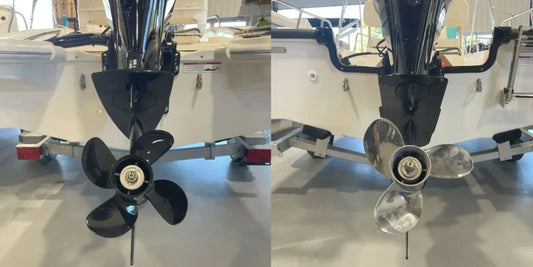
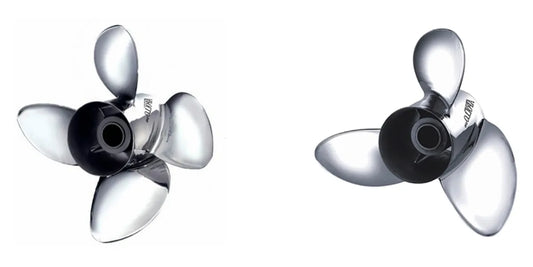
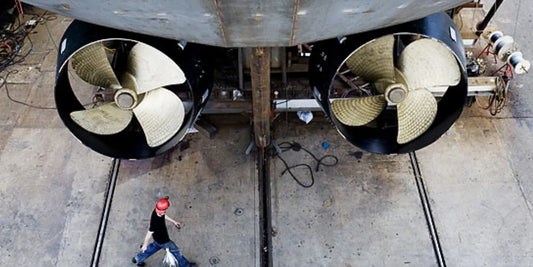
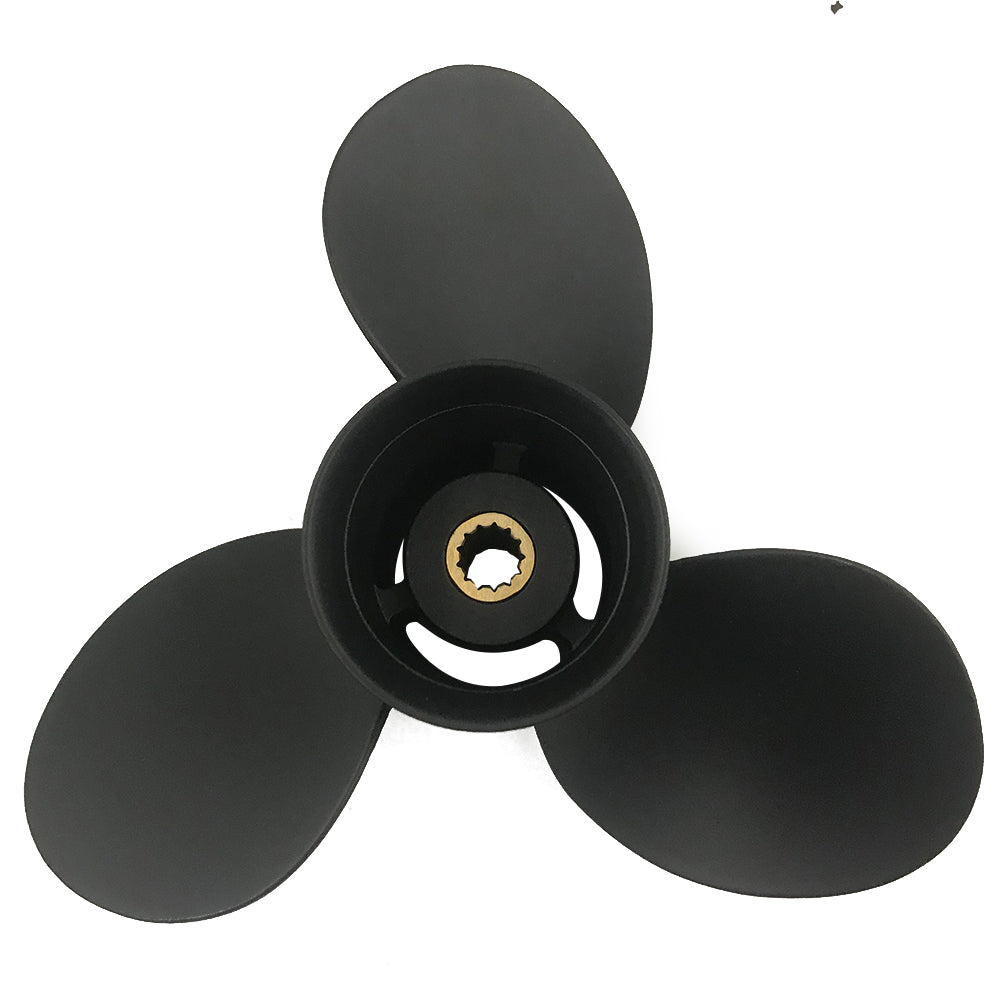
Propellers are an indispensable part of the boat and a determinant of its performance, efficiency, and control. A 3-blade propeller has three blades arranged like a standard propeller; in contrast, a 4-blade propeller has a complete standard propeller and one pairing on the opposite side, offering different benefits and trade-offs.
The 3-blade propeller is a perfect choice because of its high speed and fuel economy. The design of the 3-blade propeller leaves the least impact on the water. In this way, it is "simple" to achieve high speeds, which is why faster boats are often equipped with this type of propulsion. Producers will specifically
On the other hand, the 4-blade propeller tends to be the best option for greater flexibility, stability, and acceleration. Through the use of an extra blade, this model of the propeller is said to give a very smooth journey; such a ride is very comfortable and safe and, therefore, it is better suited to more demanding conditions, and even more, the performance during towing or at low speeds would be brilliant. They may not reach the same level of speed that a 3-blade prop can, but one of their main selling points is that they are virtually trouble-free and that they allow a very soft, aerial, and smooth trip from which you, as an angler or anyone who gives priority to control, cannot leave.
To choose between these two propeller types, one will have to weigh their boating requirements and preferences, and take into account factors like water depth, load, and what they usually enjoy doing. The decision could be tough but a real revelation really. Difference surfing will, however, assure you that your boat is aligned most closely with your boating goals.
The Importance of Correct Propeller Selection
The proper choice of propeller for your boat is essential if you want a boat that works perfectly and efficiently. The well-matched propeller not only makes it easier to control the ship and saves on fuel, but also makes your engine work more safely and last longer. The pitch, diameter, material, and number of blades affect how the propeller engages and disengages with the water under different sailing conditions. By taking the time to assess these elements, you will unquestionably have the best boat for your activities and operational needs. Moreover, your decision to conduct thorough research and seek professional help will help you achieve the best results, which will be evident on the water.
Efficiency Factors in a Nutshell
It is a must to take into consideration that the propeller elements mutually harmoniously interact, so with regard to this mutual, we would be able to achieve the best performance. The surface area of the blade contributes to the thrust generation, among other ways, but having too much area also increases drag thus reducing efficiency. The pitch - the angle of the blade - has a direct effect on how much water the blade displaces and, hence, both the speed and fuel consumption. By keeping the engine power band and propeller specifications in sync, the engine will operate within the most efficient range; thus, it will incur less wear and have a longer lifespan.
Furthermore, progress in material science has provided us with lightweight along with strong choices, like the composite propellers that do not rust even so strong over the years. Also, changes in hydrodynamic shapes achieved through computational modeling have made it possible to achieve a situation where speed is high but the vessel is very stable under rough sea conditions. In other words, if your propeller choice aligns with the vessel type, water conditions, and its intended use, it will positively affect performance, showing in smoother handling, lower fuel consumption, and less environmental pollution.
Key Differences Between 3 Blade and 4 Blade Propellers

Design and Structural Variations
Three-blade propellers have been designed with a lighter structure, enabling them to deliver higher speed and acceleration. This design will reduce drag and produce rapid movement being best in ideal water conditions. Alternatively, four-blade propellers were designed with a larger surface area, resulting in greater propulsive power and improved maneuverability in turbulent waters or when carrying heavy loads. The structural dissimilarities also affect cavitation reduction, as four-blade propellers are better at maintaining a smooth, controlled water flow around the blades.
Furthermore, the angle, pitch, and diameter are also essential factors in the performance of the different types in various applications. 3-blade propellers usually have more pitch which gives them an edge in speed, while 4-blade choices often go for a lower pitch setting to get the max pulling power without much vibration. The decision between these two kinds is a compromise among characteristics such as speed, fuel economy, and overall durability, based on specific performance requirements.
Performance in Speed and Acceleration
When we look at speed and acceleration, three-blade and four-blade propellers have distinct strengths depending on their intended use. Three-blade propellers are superior for maximum speed, mainly due to their lower drag and lighter weight, making them perfect for situations where the focus is on velocity. This design also provides a boost in acceleration when the speed needs to change quickly. Conversely, four-blade propellers, with their larger surface area, can achieve a much better bite in the water, providing a more consistent, smoother acceleration, especially under heavy loads or in rough water conditions. Keeping the above performance features in mind, users can choose the mode most suitable for their particular application by balancing the demands of speed, stability, and control.
Impact on Fuel Efficiency
Propeller efficiency is one of the most important factors to consider when deciding which is better. This is particularly the case when it comes to propellers that create fewer fuel emissions, thereby decreasing the amount of fuel used, and propellers that produce less noise, resulting in greater fuel efficiency. Meanwhile, the number of blades has a significant effect on how much pressure and speed is required to accomplish the same job, so one can say that more or higher-bladed propellers do make some trade-offs in terms of energy efficiency. On the other hand, using larger propellers with more blades results in more stable and stronger resistance, and the fuel-eater problem becomes less of an issue. It is entirely possible to make the boat go a little bit faster even when his boat is less efficient than yours. After all these considerations, the propellers really have a lot to do with this race of speed and efficiency. The answer is to select propeller types that are split down the middle on these factors, and repelling is one consideration that will almost surely come up here.
Advantages of 3 Blade Propellers

Better Top-End Speed Performance
The top speed performance improves noticeably with a three-blade propeller, providing maximum thrust. Moreover, the propeller can reduce drag and slippage, making its operation more potent than before. This power results from the even distribution of the three blades, making it much smoother and more regular. The three-blade works with a treated blade and a subordinated angle to drag the lightest at the highest speed. They are meant to be the best choice for users who want ultimate performance. Also, these propellers do not only raise the boat's speed but are very much stable and durable when in hard use.
Improved Fuel Economy for Long Distances
Carrying out long journeys or using vehicles at places where the fuel economy is a key factor, makes choosing the correct propeller arrangement an essential way for both the environment and individuals on board. Props with three blades, the top-quality ones in the industry, do energy saving by providing the best thrust needed with the least work of the engine. This is done thanks to their steadiness in giving effective propulsion at speed and thus allowing the engine to work easier and not consume much energy. For long trips, it is a significant difference because it boosts fuel savings to a noticeable degree, allowing operators to travel farther with less fuel. The latter will mainly be folks concerned with recyclability, fuel economy, and the machine's durability over an extended period.
Best Three-Blade Propellers Websites
The 3-blade propellers, which are indeed adaptable and work well across a wide range of situations, meet the needs of those engaged in this industry as well as casual users who want to enjoy water sports on the weekends. When it comes to sailing, the propellers are ideal in sectors where the meaning of the tilt, the extra weight, and the sudden change in speed are known to many, and the boats are used for fishing, cruising, or as a base for recreation. The propellers are not limited to the categories mentioned above; they are widely adopted on medium-sized marine vessels, where the boats have high performance but also require fuel to be used economically.
Moreover, the 3 blade propellers really show their fantastic efficiency when faced with the scenarios of moderate to heavy loads because they are able to provide and maintain the power output in this kind of situation. They are types of propellers called earthworms and are picked quite frequently by the people who own boats in the inland waterways where navigation is tricky and quick turns are mandatory. I believe that 3 blade propellers are the maritime engineering which made the perfect solution for tow and tug boats which cannot sacrifice on fuel economy. The 3 blade propellers are so versatile and are, hence, on top of the list for those in the marine business and lovers of water sports at the same time.
Advantages of 4 Blade Propellers

Innovated Perseverance and Grab
The majority of the boaters think of 4 blade propellers as devices that not only provide enhanced stability but also improved traction, especially in the case of difficult water conditions. The design of the 4-blade propellers spreads the load more uniformly; therefore, less vibration is felt, and the ride is smoother. It is, thus, a perfect choice for boats in the rough water of which slipping and control are two things that must be kept at a minimum. Moreover, the larger area of the 4 blade propellers contributes toward better control at slower speeds, thus facilitating docking and maneuvering to be done more accurately. So, boaters who put a premium on control, comfort, and dependability during their journey will find this product the most suitable one.
Superior Acceleration and Load Handling
Acceleration is the strength of 4 blade propellers, and they are well known for this. Even under heavy load conditions, boats still get on the plane faster. Thanks to their construction, they ensure that the engine's power is efficiently transferred throughout the extra blade, providing continuous thrust and keeping the vessel under control even when overloaded with gear, passengers, or water-sport equipment. This very advantage makes them the best choice for customers who want top-notch performance under hard conditions, such as commercial operations or recreational activities. The water grip is firmer and the cavitation is less, so, the propellers are also very smooth and will be found to be working at the same rate when the boats vary in weights. This leads to the perfect balance between power and precision which will lift boating fun to new heights.
Best Use Cases for 4 Blade Propellers
The best scenarios for 4-blade propellers are those where stability, torque, and low-end power are of major importance. The propellers are especially useful for water sports and activities, as they provide consistent thrust and control, which are essential for towing skiers or wakeboarders. In choppy or rough water, the same propellers are great for boats because they provide the best grip and help prevent the boat from slipping, so the operator gets safety and precision along the way. Besides, 4-blade propellers are the most suitable propellers for heavy loads, and are also best for commercial applications because of their superior performance even under harsh conditions. The great fuel efficiency improvement at mid-range speeds gives four blade propellers the additional advantage of being a great choice for cruising and long-distance boating, at the same time, efficiency and smooth operation are provided.
Factors to Consider When Choosing Between 3 Blade or 4 Blade Prop

Types of Watercraft and Their Usage Requirements
The type of watercraft and the purpose for which it will be used will significantly affect the choice between a 3-blade and a 4-blade propeller as the most suitable option. 3-blade propellers are usually the best choice for the lightest and the fastest vessels such as speedboats or recreational crafts that need the speed and agility that is often in the forefathers is the and the light vessel that the Recreational craft, while, to the same extent, the boats made to carry heavy loads like fishing boats, commercial vessels, or pontoons, will be more likely to be benefited from the added power and balance that a 4-blade propeller produces, especially in turbulent waters or situations where movements must be precise.
In extensions, a 4 blade propeller is usually the better choice if better fuel efficacy and a gentler running engine at cruising speeds are significant—like in the case of long-distance trips or leisurely outings. Recognizing unique watercraft features, such as hull configuration, propulsion capacity, and operating environment, will result in a propeller choice that is both efficient and effective, thereby improving the overall boating experience.
Mixing the Velocity, Efficiency, and Direction
One must truly understand the delicate harmony between velocity, efficiency, and management in order to get it just right by propulsion systems running easily around the clock. The choice of propeller design to put on board has a significant impact on optimizing all these conditions, whereas the configuration is, in the main, the performer and the leading actor in the case of ships. One of the best examples of the three-blade propellers, which are mainly designed for top speed and quick starting, is those powerboat activities and boating events where the winners are determined by their racing time.
However, if efficiency and stability are the primary considerations, a four-blade propeller can deliver higher thrust even at low speeds or in rough water. Beyond the blade count, pitch, diameter, and material also play significant roles in the propeller's overall performance. The combination of scientific advances in water dynamics and precise performance measurement tools now allows the boat owner complete control to tune the boat's setup to a degree of accuracy truly remarkable, ensuring that the watercraft meets the specific task set before it most efficiently. This method ensures that the selected propeller best suits the boat’s requirements and the user’s preferences, thereby significantly increasing satisfaction and utility.
Maintenance and Longevity Considerations
When discussing the maintenance and extension of a boat propeller's life, my approach is based on regular inspections, prompt repairs, and proper handling. My first step is to check the propeller's condition after each use, focusing on nicks, dents, and cracks that may cause long-term performance decline. It is the same with corrosion, which I am cautious about all the time, especially when boating in a saltwater environment. Every single time I go into a saltwater area I make sure to rinse the propeller well with fresh water for the prevention of the salt buildup which could lead to the long-term damage. On the other hand, I also perform regular lubrication of the propeller shaft as part of my usual activities, ensuring the prop runs smoothly and remains properly aligned.
In my view, it is essential to be aware of potential problems with the water, and this is what I do to maximize the propeller's lifespan. The propeller is prevented from getting unnecessary damage by avoiding debris, rock-filled shallows, or unmarked obstacles. I always keep a propeller puller and a spare propeller on my boat so I can minimize downtime and prevent minor issues from becoming major ones. I also make sure to keep the propeller in a dry, safe place, which is nearly as crucial, as it helps prevent rust and ensures a good shockproof design.
On the same note, I think it is best to have the propeller serviced or replaced by a professional mechanic whenever it shows signs of severe wear, such as excessive vibration or reduced performance. By practicing some form of care and preventive maintenance in an organized manner, my system remains trustworthy, efficient, and designed for long-term use. The propeller remains an integral part of the boating experience and is the main reason for safer, more pleasurable boating.
Reference Sources
3 Blade vs. 4 Blade Propeller - Michigan Wheel
3 or 4 blade prop is better for plaining faster? - Reddit
4 Blade vs 3 Blade Propeller - The Hull Truth Forum
What is the difference between a 3-blade and a 4-blade - Glastron Owners Club
What is the difference between a 3-blade prop and a 4-blade prop? Boat Owners United
Frequently Asked Questions (FAQs)
Axes defined 3-bladed and 4-bladed propellers?
The 3-bladed propeller is built and delivered light, aiding speed immensely, but is capable of holding its pace in kind, often used in the scenery of pure racing or cruising calm waters. The 4-bladed prop's advantage lies in control, stability, and torque, which are suitable for pulling watersports through and whipping rough conditions, thanks to its high torque and more blades' working surface. Generally, an additional blade really accelerates the bite by increasing the surface area for extra thrust. At the same time, a whole lot of extra drag created by the additional blade will put a slight dent in top-end speed. The choice between the two comes down to whether priority lies with speed or seaworthiness.
How Does Hydrodynamics Fit Into Fuel Cost Efficiency with Four-Bladed Propellers?
Four-blade propellers mean better fuel efficiency, sometimes at much slower speeds. They grip the water more efficiently by having less slip, keeping the speed more consistent and requiring less engine work. The extra balance and thrust distribution result in smoother, more efficient performance under heavy loads or during towing. However, under high-speed conditions, a 3-blade propeller could be more efficient for fuel economy. So, boating is a prime activity.
But Why is the 3-Bladed Propeller Better for Speed?
A 3-blade propeller scores well in speed, compared to a 4-blade design, by generating less drag. With fewer blades slicing through the water, they achieve quicker acceleration and higher top-end speed. This, in turn, makes them the prime choice for applications such as racing or recreational boating in calm waters. Also, the lower weight of a 3-blade propeller adds to the aforementioned speed benefits. But where some stability may be sacrificed from this choice is in rough seas or when there are repeatedly quick, short waves.
Which Propeller is Best Suited for Rough Conditions?
During rough waters, a four-bladed boat propeller offers distinct advantages, providing the requisite stability and control. The bite of the propeller in heavy weather guarantees praiseworthy thrust, consistently propelling the boat and reducing cavitation. Hence, they are ideal for offshore boating, where steady handling is essential. The situation is entirely different for the three-bladed boat propeller due to a problem with reduced surface area. Thus, the four-bladed propeller is most likely to get ventilated and is far less predictable. Thus, for rough waters, it is always better to go with a 4-blade propeller.
How do I choose the right propeller for my boat?
The right propeller will depend mainly on the water sports and conditions. For speed and maximum performance, a three-blade propeller is probably the best choice. In activities such as on-water stability, torque, and towing capability, one would more likely choose a four-blade. Bear in mind the engine specifications; how heavy is the load usually, and what water your boat sails into? To see which gives you the best of speed, control, and utility, interviewing opinions are your priority.
Tags:
Previous
A Step-by-Step Guide to Effective Marine Propeller Repair and Maintenance
Next
Top Maintenance Tips for Keeping Your Inboard Boat Propellers in Perfect Condition