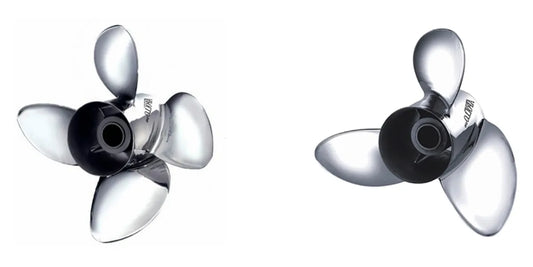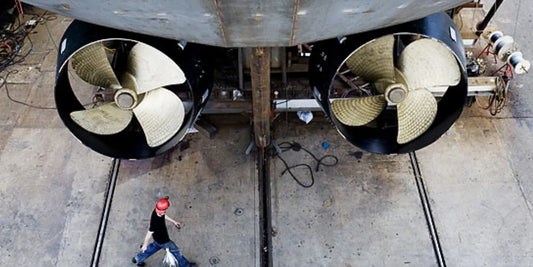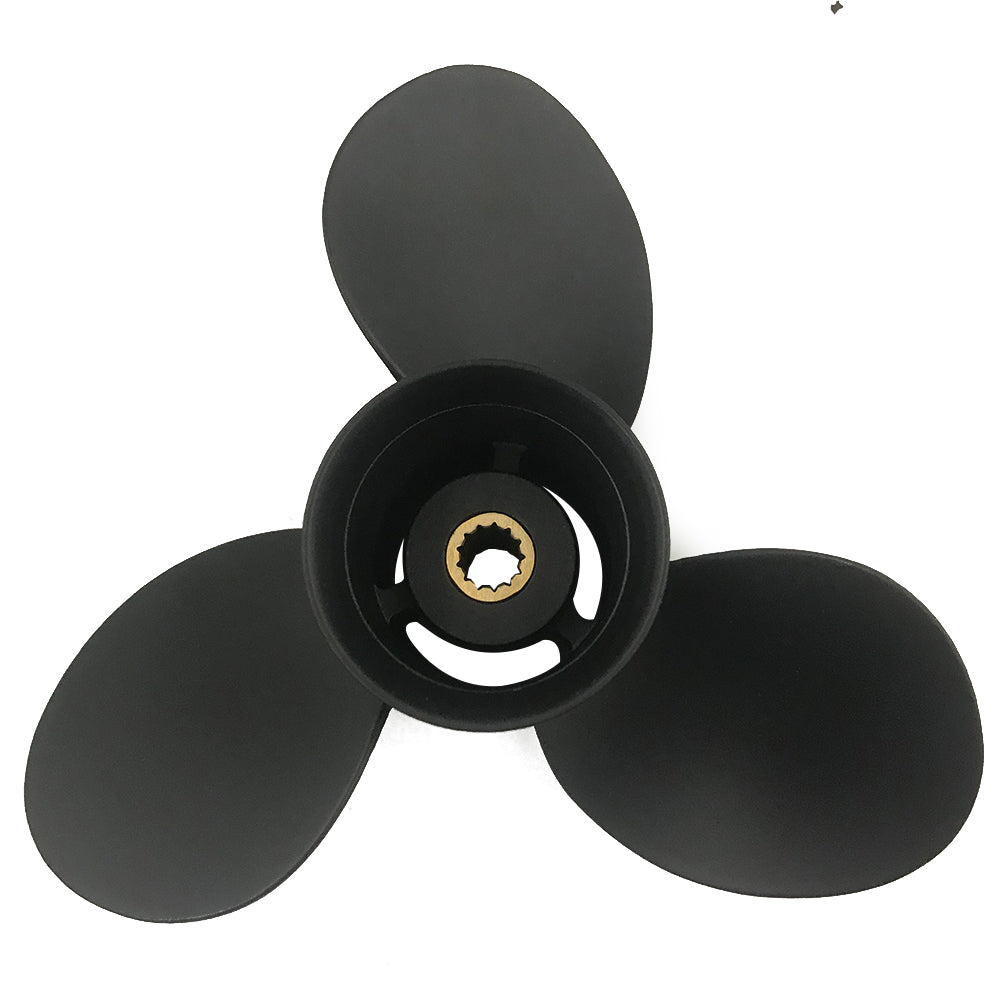

Selecting the proper propeller for your boat is one of the most critical decisions you could make. It has a profound impact on both fuel efficiency and top speed, and it also significantly affects the boat's maneuverability and acceleration. Boat owners have to choose between a 3-blade and a 4-blade propeller, and, although it may look insignificant, the number of blades can totally reshape and define the boat's performance on the water.
Hence, this tutorial is going to cover all the adventures you might have with 3 or 4-blade props. We would be discovering the primary mechanics of propeller operation, comparing the performance characteristics of each type, and breaking down the critical factors to consider when selecting a propeller. In the end, you would have knowledge through which you can identify the propeller that is your boat, engine, and the peculiar need, guaranteeing you have the time of your life during every water ride.
Understanding Propeller Basics

What exactly is a Propeller?
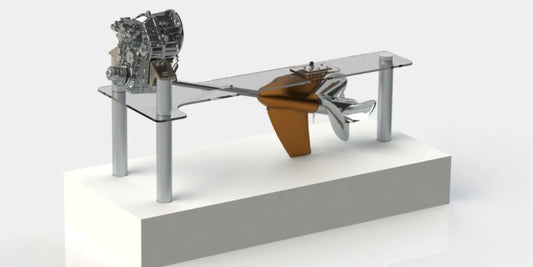
A propeller is a device that conveys power by changing the rotation of the part into thrust. In the case of a boat, the engine is the trigger that spins the propeller blades, each of which has an angle inclined so to drive the water in the opposite direction. It is demonstrated by Newton's third law of motion that in every action there is an equal and opposite reaction. Therefore, the propeller thrusts water forward into the boat.
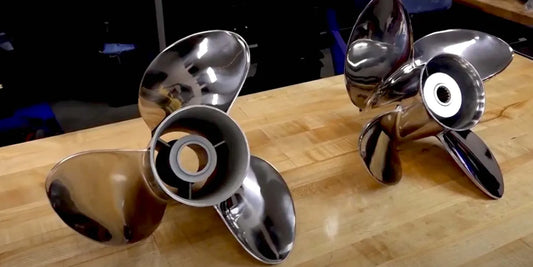
A propeller consists of a central hub attached to the engine's propeller shaft and at least two blades extending from the hub. Performance is characterized by factors such as diameter, pitch, and blade count.
Diameter: The measurement of the circle across the blade tips. A bigger diameter can move more water, but also needs more power.
Pitch: The theoretical distance the propeller would move per one full rotation, if there were no slippage. Increasing the pitch will increase speed, while reducing it will accelerate it.
How Propeller Blades Work
The propeller chamber of every blade is indeed a wing in the water. A propeller blade means an airfoil-like shape with a curved side (pressure side) and a less curved side (suction side). As the blade turns, the water moves quickly over the curved face than the less curved face. This difference in speed leads to a differential in pressure: lower pressure on the curved face and higher pressure on the less curved face. This disparity in pressure is what makes the lift happen, which, in the case of the propeller, is thrust-oriented.
The effectiveness of this procedure depends on the blade's shape, size, and angle. Each blade delivers a contribution to the total thrust produced by the propeller.
The Significance of Blade Number
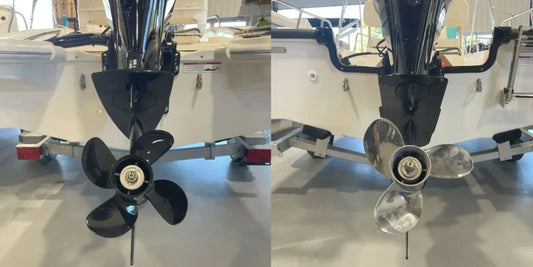
The number of blades on a propeller is a key parameter affecting the performance of the propeller as a whole. Moving up more blades changes the way propeller operates in the water. In general, the additional blade increases the total blade surface at any given moment in the water. This also allows the propeller to have a better grip on the water which can result in better acceleration and reduced vibration.
Nevertheless, every extra blade will also produce more drag, which, in turn, will slightly curtail the speed of the boat. Thus, the selection of a 3-blade or a 4-blade propeller depends on a compromise between these two features. The most favorable blade count is the one that would correspond to the boat's hull, weight, engine power, and the way the boater plans to use it.
Differences Between 3 Blade and 4 Blade Props

Performance Specifications of 3 Blade Propellers
The 3-blade propeller is the most used among all types in the marine industry and it is very popular. In fact, there are good reasons for this, as it not only performs excellently across all conditions but is also more effective in various conditions.
High Top Speed: With one less blade to cause water drag, the 3-blade propeller's efficiency at high speeds is, in general, better than that of 4-blade propellers. Most of the boaters who are aiming to achieve the highest possible miles per hour by far are using the 3-blade period.
Good All-Around Performance: In addition to their excellent acceleration, cruising efficiency, and speed, they also suit the majority of general-purpose boating activities.
Widely Available and Cost-Effective: The prevalence of 3-blade props means they are produced in a wide variety of sizes and materials. They are relatively cheap and easy to find as the big production volume of such keeps the prices down, and also numerous suppliers are vying for the same market share.
Performance Characteristics of 4 Blade Propellers
A four-bladed propeller distributes engine power over a larger blade surface, resulting in several performance advantages.
Faster take-off: The extra blade makes it easier for the propeller to get the water, and the boat gets up on plane quicker. This feature is advantageous for most water sports, such as water skiing and wakeboarding.
Quieter and more controlled drive: Most of the time the extra blade area produces less vibration and thus a quieter and more controlled drive. Besides, it also improves handling, particularly in sharp turns and in wild water, because the propeller doesn't slip as easily (ventilating).
The joy of cruising more efficiently: Many yacht owners tend to see that a four-bladed propeller allows them to maintain cruising speed at a lower RPM. This situation can lead to lower fuel consumption and a quieter, more comfortable ride.
4-blade props offer a solid plan and remain efficient, providing the required thrust for heavier boats or those often loaded with gear and passengers.
3 Blade vs 4 Blade: Key Differences
To summarize, here is a direct comparison of the key performance differences:
|
Feature |
3-Blade Propeller |
4-Blade Propeller |
|---|---|---|
|
Top Speed |
Generally higher |
Generally slightly lower |
|
Acceleration |
Good |
Excellent |
|
Handling |
Good |
Excellent, especially in turns |
|
Vibration |
More noticeable |
Smoother, less vibration |
|
Fuel Efficiency |
Good at high RPM |
Often better at cruise RPM |
|
Best For |
Lighter boats, speed |
Heavy boats, watersports, rough water |
|
Cost |
More affordable |
More expensive |
Factors to Consider When Choosing a Blade Prop

Boat Type and Usage
You will first have to consider the boat type and its intended use, which are key factors.
Lightweight, High-Performance Boats: Three-bladed propellers are typically the best choice for bass boats, speedboats, and other light vessels designed for speed, as reduced drag helps maximize the watercraft's velocity.
Cruisers and Pontoon Boats: Heavier boats will benefit from having more thrust and grip of a 4-blade prop. It also helps them get on the plane faster and be more fuel-efficient at cruising speeds, even with heavy loads of passengers.
Watersports Boats: For those who are all into water sports and spend more time pulling skiers, wakeboarders, and tubers, the 4-blade prop with superior acceleration is a significant advantage. It delivers the low-end power needed to pull a rider out of the water quickly and smoothly.
Offshore Fishing Boats: Sea vessels that constantly work in rough seas can gain an edge in grip and water propulsion with a 4-blade prop. The same boat would not have the same effect with a 3-blade prop, which is more likely to lift it and turn it.
Engine Power and Compatibility
The power of your engine and the range in which it is efficient (WOT RPM) are vital. The propeller should allow the engine to fall within its optimal RPM range at open throttle.
Under-Propped: Ships that have props with too much pitch power or too little diameter are at more risk of damaging the engine by allowing the engine to rev over its limit.
Over-Propped: Ships with props with too little pitch power or too much diameter are at greater risk of poor performance, high fuel consumption, and excessive engine strain if the RPM is not met.
In most cases, when you switch from a 3-blade propeller to a 4-blade one, you have to apply a decrease of one or two inches in pitch to the engine. The situation occurs due to the additional blade, which imposes an upward trend of the load on the engine. In this respect, the advice is to refer to the specific engine service or maintenance description, and the best way is to discuss it with a propeller specialist.
Speed and handling are the most critical factors
Lastly, take time to determine what the most significant performance factor is on a sailboat for you.
For the thrill of maximum speed and a lightweight, swift boat, buying a 3-blade propeller is the safest and most recommended option.
But, if you are someone who gives priority to the quickness of acceleration, the smoothness of the ride is still unchanged, and the handling is better, especially in the case of having a lot of heavy things to load or in the rough water, the 4-blade propeller is most likely the way you should go.
Benefits of 3 Blade and 4 Blade Propellers

Benefits of 3 Blade Props
High-Speed: One of the reasons they are so popular is their ability to reach dizzying speeds, thanks to their super-effectiveness at high RPMs.
Price and Variety: They reign the market as the most common, making them the cheapest and most accessible in terms of size range and available materials (aluminum and stainless steel).
A Good Choice for All Purposes: If we consider someone who enjoys the boating life and is also a 3-blade prop acrobat, then it is the overall performance king of propellers for them.
Advantages of 4 Blade Props
Best Hole Shot: The increased traction enables swift acceleration, making for a very convenient fast takeoff.
Quieter Running: The propeller turns more gently and with less vibration because the force is distributed among the four blades, which, in turn, makes it more comfortable for passengers.
Improved Control in Rough Water: They can be found opposing the water hard, whether the water is choppy or not, thus providing better control and safety.
Enhanced Mid-Range Performance: They're especially good at cruising speeds, often keeping the boat on the plane even at lower RPMs, a practice that helps save fuel.
Common Misconceptions About Blade Count

Myths Surrounding 3 Blade Propellers
Myth: 3-blade props are only for going fast.
Fact: 3-blade propellers are the ultimate speed performers, but when well-matched, they become the go-to choice for a wide circle of boats wanting the same performance characteristics. They are the standard for a reason.
Myth: 3-blade props always vibrate more.
Fact: A high-quality, balanced 3-blade propeller will run very smoothly. Significant vibration is more often a sign of damage, an imbalance, or a poor match for the boat and engine.
Myths Surrounding 4 Blade Propellers
Myth: A 4-blade prop will always make your boat slower.
Fact: Although a 4-blade prop might knock 1-2 MPH off the top speed, it does not always happen. In quite a few cases, especially on heavier boats or boats that were really struggling to get on the plan, the more efficient operation of a 4-blade prop may result in a slight speed increase.
Myth: You only need a 4-blade prop for watersports.
Truth: Do not consider them only as a watersport-only vehicle - their advantages in control, fuel economy during the cruise, and stability in rough conditions have made them a perfect pick for some vessels, including those used for going far out to sea.
Reference Sources
- 3 Blade vs. 4 Blade Propeller - Michigan Wheel
- 3 or 4 Blade Prop - Boat Talk
- What is the Difference Between a 3 Blade and a 4 Blade - Glastron Owners Club
- 3 Blade Propeller vs 4 Blade Propeller - Boat Design Forum
- Selecting the Best Prop is Crucial but Easy with Mercury Marine
Frequently Asked Questions (FAQs)
What are the differences between a 4-blade and a 3-blade prop in terms of performance and fuel economy?
In addition to the increase in blade area and improved holeshot of a 4-blade prop, which provide better acceleration from a standstill, there are other points to consider. Among the several advantages, one that is especially beneficial for recreational boats that start and stop frequently is the smoother ride. On the other hand, a 4-blade propeller usually offers better fuel economy at low speeds because slip and drag are reduced. In addition, the reduced-blade prop can also be the primary source of better resistance against the capriciousness of the water/sea and is consequently the most favorable for overall vessel stability. At the same time, there is at least a slight decrease in top-end performance, and the 3-blade still remains the best choice for boats that need to operate at high RPM.
What impact does the number of blades have on a propeller's fuel economy?
Having more blades on a propeller makes a significant difference when it comes to fuel efficiency. A 4-blade propeller windmill covers a large area, and this reduced slip may make it easier, more economical, and higher-rev. Thus, people who buy boats might save money on diesel in the long run if they cruise at lower speeds. Contrary to that, a 3-blade propeller might push the boat to the fastest speed at WOT but it might not be very good in starting and fuel consumption at slow speeds. The sailboat's use should definitely be taken into account when choosing between a 3-blade and a 4-blade prop.
Is it possible for a 4-blade propeller to help a boat's hole shot?
Of course! A 4-blade propeller indeed gives a boat's hole shot better than a 3-blade prop. The extra blade serves larger surface area and thrust, making the boat to accelerate from its standstill situation at a faster rate. This is like a booster for boat owners who are into water sports or need to go from idle to speed very quickly. However, the specific boat improvement may vary, as the hull and 4-blade propeller are dependent factors. At times, the boat's speed may rise to the point of drudgery, canceling out the advantages.
Can you say something about the performance differences of a 3-blade vs. a 4-blade propeller at high speeds?
At fast rates of movement, and when equipped with a 3-blade propeller, a boat will usually perform better than with a 4-blade propeller because of decreased drag and less resistance. This results in less stress on the engine and eventually higher speeds where the engine and boat top speeds are considered overall. A 4-blade propeller, though, can still provide enough thrust to keep the boat at a constant speed, and it may be better at this than a 3-blade propeller, particularly when the water is very rough. People who want a boat with good performance may prefer a 3-blade propeller, but only for racing or activities that require very high speed. At the same time, those focused on acceleration and the boat's handling are more likely to go for a 4-blade propeller. The final selection will be based on the user's preference between speed and efficiency.
What difference in the blade diameter could lead to a propeller's better performance?
Blade diameter has a significant impact on the boat's operation, whether it's powered by a 3-blade or 4-blade propeller. An increase in diameter can yield more thrust and shorten the time to plane, making it very advantageous. Yet, this factor can also induce greater drag at higher speeds, reducing the boat's overall performance. The optimal prop can be achieved by the boat owner who finds the perfect mix of diameter and pitch, adjusted to the specific RPM and horsepower. On the other hand, changes in blade diameter can affect fuel consumption, especially at low RPMs.
What should be the key factors in a 3-blade vs. 4-blade propeller's choice for the boat owners?
When deciding on the blade count for the propeller, boat owners have many factors to consider, such as the boat's intended use, its type, and its performance needs. If one needs quick acceleration and is inclined towards a better hole shot, then a 4-blade prop may be the best and only choice worth trying. On the flip side, if the priority is top speed and full-throttle efficiency, a 3-blade prop may be the best choice. Furthermore, factors to be considered include hull crab design, the area where the engine will run its cycle (low or high), fuel consumption, among others. The final call on what to do will have to come from individual boaters and their conditions.
Tags:
Previous
Comparing the Difference Between 3 and 4 Blade Prop for Optimal Propeller Selection
Next
A Step-by-Step Guide to Effective Marine Propeller Repair and Maintenance